
The Pines Rest Area: A Major Win for the Mad River Valley
Sometimes the biggest success stories don’t begin with a ribbon cutting. They begin with someone who simply cares.
For years, local resident Joshua Schwartz quietly mowed the Pines Rest Area because he believed this overlooked piece of public land deserved better. Five years ago, people like Josh helped inspire the creation of stewardMRV—a simple idea built around supporting the volunteers who care for the places we all love.
Today, the transformation of the Pines Rest Area stands as one of stewardMRV’s greatest successes.
From Derelict to a Community Asset
Not that long ago, the Pines was known more for neglect, illegal camping, drug use and other troubling activity than as a place to enjoy the Mad River. Its ancient picnic tables were falling apart, dead trees posed safety concerns and the parking area needed attention.
There was also considerable confusion about who actually owned the property. Some local folks believed it was owned locally, but after a little digging, it was confirmed that the Pines belongs to the State of Vermont.
Little by little, that story began to change.
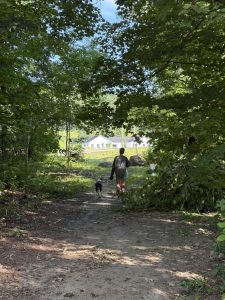
This past Fourth of July weekend, the difference was unmistakable. Families were picnicking. Friends were gathering. People were carrying tubes and towels down to the river. What had once felt derelict had become a popular day-use area and river access point.
That is a major win for the Mad River Valley.
And it didn’t happen because one organization rode in and fixed everything. It happened because a community kept showing up.
Collaboration Made It Possible
The Pines is a terrific example of the Mad River Valley Chamber of Commerce working in the way we believe it can be most effective: identifying a need, bringing the right people together, finding resources, supporting those already doing the work and helping turn many individual efforts into lasting progress. Tom Spencer, the stewardMRV Project Coordinator led the effort but the Chamber didn’t do this alone. Far from it.
The Town of Waitsfield helped engage the State of Vermont and VTrans to identify the major work needed at the site. Waitsfield Town Manager York Haverkamp was instrumental in getting everyone pulling in the same direction.
As the State and VTrans saw the community’s commitment to stewarding the property, they became increasingly engaged. VTrans crews rebuilt the parking area and removed dead and dangerous trees, making the site safer and much more welcoming.
The Town of Waitsfield also stepped up in a big way. After discussions with the State, the Town agreed to assume responsibility for mowing the Pines going forward. It is good to know that this work is finally being taken off Joshua’s plate after his many years of quietly keeping the property cared for.
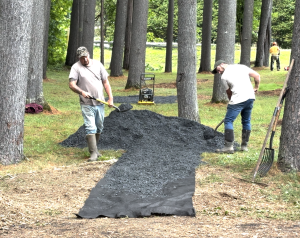
Seeing the broader investment being made, the Town also contributed approximately $3,000 to grind the old stumps, seed the disturbed ground and install StayMat pads and an accessible pathway for the new picnic tables. All of which will make their on-going mowing effort easier and more sustainable
The MRV Knotweed Initiative has worked to combat the invasive plants threatening the river corridor. Volunteers have pulled weeds, hauled trash, cleared brush and taken part in workdays. Local organizations and community members have offered labor, equipment, ideas and encouragement.
Every improvement built upon the one before it.
The result is a healthier, safer and far more welcoming public space—and a much stronger working relationship among the community, the Town of Waitsfield and the State agency that owns it.
Generosity That Inspired More Generosity
The transformation also received an important boost through the generosity of David and Sharon McCue.
Their grant provided funding for a new heavy-duty covered charcoal grill, giving families and visitors another reason to spend time at the Pines. Just as importantly, their gift helped demonstrate what was possible and leveraged an additional anonymous contribution toward the continuing improvements.
That is how community investment is supposed to work. One act of generosity creates momentum, inspires another and gives volunteers and partners something tangible to build upon.
Two new accessible picnic tables, along with their StayMat pads and pathway, will make the site more welcoming to people of different ages and abilities. A new trailhead kiosk has been constructed and is awaiting final State approval before it is posted. A dog-waste station will also be installed this fall.
These may sound like relatively modest improvements when viewed one at a time. Taken together, they have completely changed how the Pines looks, feels and functions.
More Than Picnic Tables
 But this story isn’t really about picnic tables, parking lots or even a new grill.
It is about what can happen when people stop asking, “Whose job is it?” and start asking, “How can I help?”
It is about recognizing the people who quietly cared for a place long before there was funding or public attention. It is about a Town stepping forward to assume an ongoing responsibility. It is about a State agency becoming a willing partner because it sees that the community is invested. It is about private generosity leveraging additional support.
And it is about the Chamber serving as a facilitator—connecting the people, resources and ideas needed to move something forward.
This is the Chamber working at its best.
 Our role is not always to own the project or stand at the center of the photograph. Often, our most important work happens behind the scenes: making the call, finding the partner, pursuing the grant, solving the problem and keeping everyone moving toward a shared goal.
The Pines Rest Area is now a visible reminder that this kind of work matters.
A Community Did This
 The Mad River Valley has always been at its best when people come together around a shared purpose.
This place didn’t change because one organization showed up.
It changed because a community did.
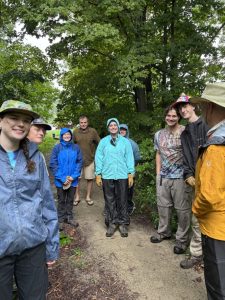
Our sincere thanks go to David and Janet McCue; the anonymous donor whose support followed theirs; Joshua Schwartz; York Haverkamp and the Town of Waitsfield; VTrans and the State of Vermont; the MRV Knotweed Initiative; the stewardMRV volunteers; and every person who has picked up a rake, pushed a mower, pulled knotweed, hauled trash, shared an idea or simply believed the Pines was worth caring for.
The work isn’t finished. Stewardship never really is.
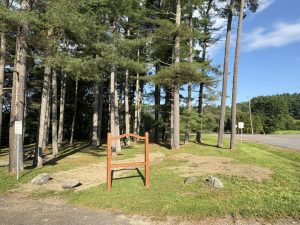 But the Pines Rest Area has gone from a neglected and problematic property to a newly popular community day-use area and gateway to the Mad River.
That is something worth celebrating—and something worth building upon.
